
Tooth-Colored Fillings at Kitto Family Dental
Tooth-colored, mercury-free fillings that blend right in. Most take just one visit, and you’re back to your day before you know it.
- Most fillings done in one visit
- Tooth-colored to blend in
- Numbing before we start
- Help understanding your insurance
- CareCredit, Cherry, or our membership plan
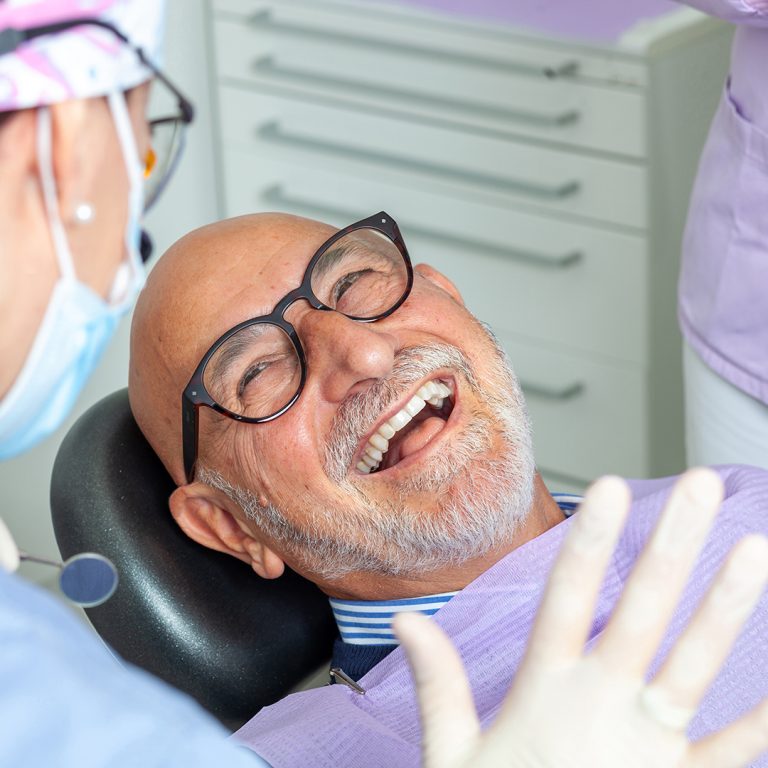
Tooth-colored fillings that blend in.
What are the benefits of fillings?
Stops a cavity in its tracks
Removing the decay protects the rest of the tooth.
Nobody will notice
Tooth-colored material blends with your smile.
Keeps more of your tooth
Small fillings remove only what is needed.
In and out
Most single fillings take 30 to 60 minutes.
Bye-bye, cold-drink zing
Filling a cavity can ease pain from cold and sweets. See sensitive teeth.
Skips bigger work later
Treating a small cavity early can avoid a crown or root canal later.
A filling, step by step.
We apply topical gel first, then local anesthetic. We wait for full numbness before anything starts.
Only the decayed and weakened tooth structure is removed. We preserve as much healthy tooth as possible.
Composite resin is placed in layers, each layer light-cured. Final shaping matches your natural bite.
We check your bite with articulating paper, adjust if needed, and polish to a smooth finish.
When a filling does the trick.
Fillings work well for small-to-moderate cavities and small chips. For larger cavities, teeth with cracks, or teeth that have already had multiple fillings, a crown may be a better choice because it protects more of the tooth. We’ll explain the trade-offs for your specific situation and let you decide.
After your filling.
- Wait until numbness is fully gone before eating. Chewing a numb lip or tongue is common and uncomfortable.
- Sensitivity to cold or pressure for a few days is normal and typically resolves within one to two weeks.
- If your bite feels off even after the numbness is gone, call us. A quick bite adjustment is simple and solves the problem.
- Brush and floss normally once numbness is gone.
How long will my filling last?
Well-placed tooth-colored composite fillings typically last five to ten years, sometimes much longer. Lifespan depends on four factors: how big the filling is relative to the tooth, where in the mouth it sits, how much pressure your bite puts on it, and how consistently you brush, floss, and keep your preventive visits.
Small fillings on front teeth routinely last ten or more years. Larger fillings on back chewing surfaces are the ones that wear out faster, because they are doing more work. When a filling is too large to replace with another filling, that is usually a signal that the tooth needs a crown to protect the remaining structure.
At every six-month visit, we check your existing fillings for wear, chips, or decay around the edges. Replacing a small failure early is far simpler than waiting until a tooth cracks.
How long different filling materials typically last
| Material | Typical lifespan | Best for |
|---|---|---|
| Tooth-colored composite | 5 to 10 years | Front teeth, small-to-moderate cavities, visible areas |
| Silver amalgam (historical) | 10 to 15 years | Back teeth under heavy chewing (less used today) |
| Porcelain inlay/onlay | 10 to 15+ years | Larger cavities where a filling is too much and a crown is too much |
| Gold inlay/onlay | 15 to 30 years | Patients who prioritize longevity over aesthetics |
Who you’ll see.

Dr. Ashley Kitto Channer, DDS
Loma Linda University School of Dentistry. Practicing since 2011, in the practice her father, Dr. Robert Kitto, founded. Full-scope family and restorative care.
Every doctor here sees kids and adults, and you can ask for the same doctor each visit. Meet all three dentists.
Insurance, minus the headache.
- Most PPO plans welcome. We check your benefits before your visit, including deductible and remaining yearly maximum.
- A written estimate first. For anything beyond a routine preventive visit, you see what insurance is expected to pay and what you owe before we begin.
- We file the claim. You don’t need to send anything to your carrier yourself.
- No insurance? No problem. We explain costs up front. Our membership plan covers routine care for one yearly fee, and CareCredit or Cherry financing can help with larger treatment.
Not sure what your plan covers?
Call with your carrier name and member ID. We’ll tell you what to expect before you book. Heads up: we don’t participate in most DHMO or Medi-Cal dental plans.
Check my coverageWhy fix a cavity now?
Cavities don’t heal on their own. They tend to grow deeper over time, and a cavity that reaches the nerve can lead to pain, infection, or a root canal. Small fillings are quicker and cost less.
Have questions about fillings?
Will my filling hurt?
How long do fillings last?
Do you still use silver (amalgam) fillings?
Can you replace my old silver fillings?
Does my insurance cover fillings?
How long does a filling appointment take?
What if the cavity is too big for a filling?
Will I know the cost before treatment, and when do I pay?
Why people love Kitto.
4.9
473 Google reviews as of October 2026.
While you’re here.
Swipe for more. It all happens right here on East Main.
Family Dentistry
One dental home for kids, parents, and grandparents.
Schedule onlineCleanings and Exams
Gentle visits that keep small problems small.
Schedule onlineKids’ Dentistry
Patient, playful visits from the first tooth on.
Schedule onlineEmergency Dentistry
Tooth pain or a broken tooth? Call for same-day help.
Call (805) 922-4109Dental Crowns
Protect a cracked or weak tooth.
Schedule onlineDental Implants
Replace a tooth with one anchored like a root.
Schedule onlineTeeth Whitening
Lift stains safely, matched to your enamel.
Schedule onlineClear Aligners
Straighten teeth with clear, removable trays.
Schedule onlineRoot Canal Treatment
Stop infection pain and keep your tooth.
Call (805) 922-4109Tooth Extractions
Careful removal when a tooth can’t be saved.
Call (805) 922-4109Dental Bridges
A fixed tooth that fills the gap.
Schedule onlineDental Bonding
Fix chips and small gaps in one visit.
Schedule onlineGum Health
Treat bleeding or puffy gums early.
Schedule onlineSealants and Fluoride
No-drill protection against cavities.
Schedule onlineComfort for Anxious Patients
Go at your pace, with breaks and no judgment.
Schedule online
Light reading (for your teeth).
We accept most PPO plans, CareCredit, Cherry, and offer a membership plan for patients without insurance.
Think you’ve got a cavity? Let’s look.
Call us. A short exam tells us what you are dealing with and your options.