
Root Canal Treatment at Kitto Family Dental
A root canal is often the calmest way to save an infected tooth. Careful numbing and clear explanations make it far less dramatic than its reputation.
- Numbing so you feel pressure, not pain
- Most visits take 60 to 90 minutes
- Saves your natural tooth
- Help understanding your insurance
- CareCredit, Cherry, or our membership plan
Save the tooth. Keep the plan simple.
What are the benefits of root canal treatment?
Relieves tooth pain
Removing the infected nerve usually ends the throbbing.
Your tooth stays put
Your natural root stays in place.
Stops the infection
Cleaning and sealing the canals helps prevent it from spreading.
Back to normal chewing
Once restored, the tooth works like any other.
Protected with a crown
Back teeth usually get a crown afterward.
Often less costly than replacement
Saving a tooth is usually simpler than an implant or bridge.
When a root canal is the right call.
Common reasons we recommend a root canal:
- Persistent pain or sensitivity, especially to heat
- A tooth that aches on its own, keeps you up at night, or has sharp pain when biting
- Swelling or a small bump on the gum near the tooth (often a sign of infection)
- A deeply cracked tooth or very large cavity that has reached the nerve
- A tooth that darkens over time without obvious cause
Not every painful tooth needs a root canal. We examine, image, and sometimes test the tooth to confirm the right treatment. Occasionally a simpler fix like a filling or antibiotics is the right first step. Sometimes a specialist (endodontist) is the right referral.
What a root canal visit is really like.
We apply topical gel first, then local anesthetic. We wait for full numbness and check with you before anything starts. If you need extra comfort support, we discuss it before the visit.
A small opening in the tooth. Infected or damaged tissue is removed. The inside is cleaned and shaped.
A biocompatible filling material seals the cleaned space. A temporary filling closes the opening.
Most back-tooth root canals get a crown afterward to prevent the tooth from fracturing. We discuss timing and cost when we plan the treatment.
About comfort during the procedure.
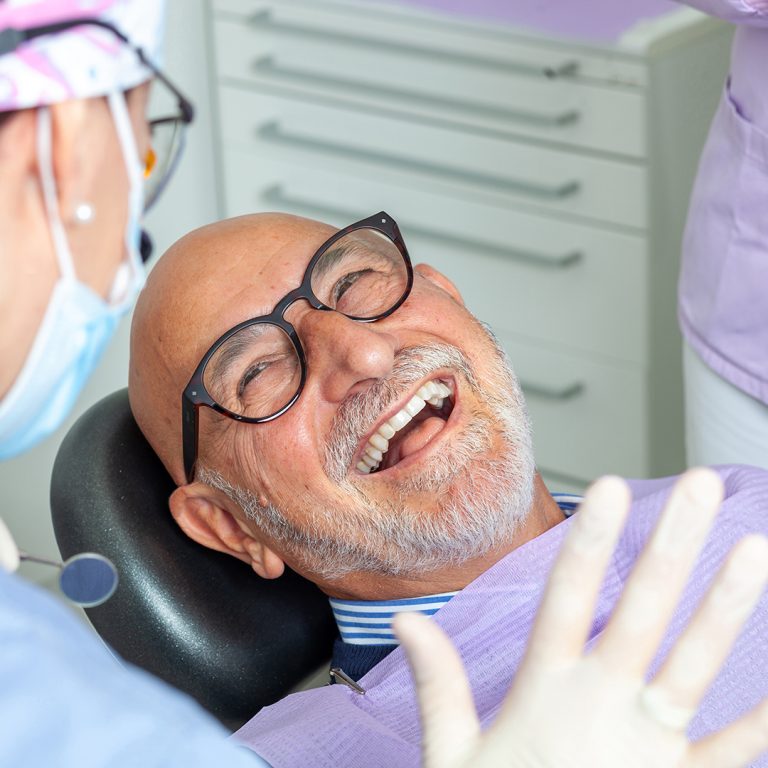
Modern local anesthesia is highly effective, and most patients report that the root canal visit itself is far more comfortable than they expected. Most feel pressure and hear the instruments, but don’t feel sharp pain. If at any point during the procedure you do feel discomfort, raise your hand. We stop, add more numbing, and continue only when you’re ready.
If you’re anxious or if the tooth is particularly inflamed (which can make numbing harder to achieve), tell us at scheduling. We discuss comfort options including sedation when appropriate.
Aftercare and recovery.
- Avoid chewing on the treated tooth until the final restoration is in place.
- Mild soreness for a few days is typical and usually responds to over-the-counter pain relievers.
- Call us if swelling or pain worsens, or if you have any concerns.
- Keep the follow-up appointment to place the final crown. A tooth with a root canal and only a temporary filling can crack over time.
Scheduling, driving, and cost.
Driving yourself: If your root canal is done with local anesthesia only, you can drive yourself to and from the visit. The numbness wears off in a few hours. If you choose sedation for comfort or anxiety, please arrange a ride home.
Length of visit: Most root canals take 60 to 90 minutes. More complex cases may need a second visit.
Cost and insurance: Costs vary by tooth location and complexity. Most PPO dental plans cover a portion of root canal treatment. We recommend a pre-treatment estimate from your insurance. See our insurance and payment page.
Who you’ll see.

Dr. Ashley Kitto Channer, DDS
Loma Linda University School of Dentistry. Practicing since 2011, in the practice her father, Dr. Robert Kitto, founded. Full-scope family and restorative care.
Every doctor here sees kids and adults, and you can ask for the same doctor each visit. Meet all three dentists.
Insurance, minus the headache.
- Most PPO plans welcome. We check your benefits before your visit, including deductible and remaining yearly maximum.
- A written estimate first. For anything beyond a routine preventive visit, you see what insurance is expected to pay and what you owe before we begin.
- We file the claim. You don’t need to send anything to your carrier yourself.
- No insurance? No problem. We explain costs up front. Our membership plan covers routine care for one yearly fee, and CareCredit or Cherry financing can help with larger treatment.
Not sure what your plan covers?
Call with your carrier name and member ID. We’ll tell you what to expect before you book. Heads up: we don’t participate in most DHMO or Medi-Cal dental plans.
Check my coverageWhy not wait out tooth pain?
An infected nerve doesn’t heal on its own. Pain may come and go, but infection can spread to the bone and cause swelling. Treating it promptly gives the best chance of keeping the tooth.
Have questions about root canal treatment?
Does a root canal hurt during the procedure?
How long does a root canal take?
Will I be able to drive myself home?
Will I need a crown after a root canal?
How long will the tooth last?
Can I just pull the tooth instead?
What if the pain is severe right now?
Will I know the cost before treatment, and when do I pay?
Why people love Kitto.
4.9
473 Google reviews as of October 2026.
While you’re here.
Swipe for more. It all happens right here on East Main.
Family Dentistry
One dental home for kids, parents, and grandparents.
Schedule onlineCleanings and Exams
Gentle visits that keep small problems small.
Schedule onlineKids’ Dentistry
Patient, playful visits from the first tooth on.
Schedule onlineEmergency Dentistry
Tooth pain or a broken tooth? Call for same-day help.
Call (805) 922-4109Tooth-Colored Fillings
Repair a cavity in one visit.
Schedule onlineDental Crowns
Protect a cracked or weak tooth.
Schedule onlineDental Implants
Replace a tooth with one anchored like a root.
Schedule onlineTeeth Whitening
Lift stains safely, matched to your enamel.
Schedule onlineClear Aligners
Straighten teeth with clear, removable trays.
Schedule onlineTooth Extractions
Careful removal when a tooth can’t be saved.
Call (805) 922-4109Dental Bridges
A fixed tooth that fills the gap.
Schedule onlineDental Bonding
Fix chips and small gaps in one visit.
Schedule onlineGum Health
Treat bleeding or puffy gums early.
Schedule onlineSealants and Fluoride
No-drill protection against cavities.
Schedule onlineComfort for Anxious Patients
Go at your pace, with breaks and no judgment.
Schedule online
Light reading (for your teeth).
We accept most PPO plans, CareCredit, Cherry, and offer a membership plan for patients without insurance.
Think you might need a root canal?
Call us for an evaluation. We confirm what the tooth actually needs before any treatment.